ServicesSurface Preparation and Sanding
Surface Preparation and Sanding in Rahway
Paint shows every flaw under it. We fill the dents, knock down the ridges, sand old patches flat and spot-prime bare compound, so your walls and ceilings are smooth and ready for color. We keep a clean work area and tell you plainly what your surfaces need.
What surface prep is, and when you need it
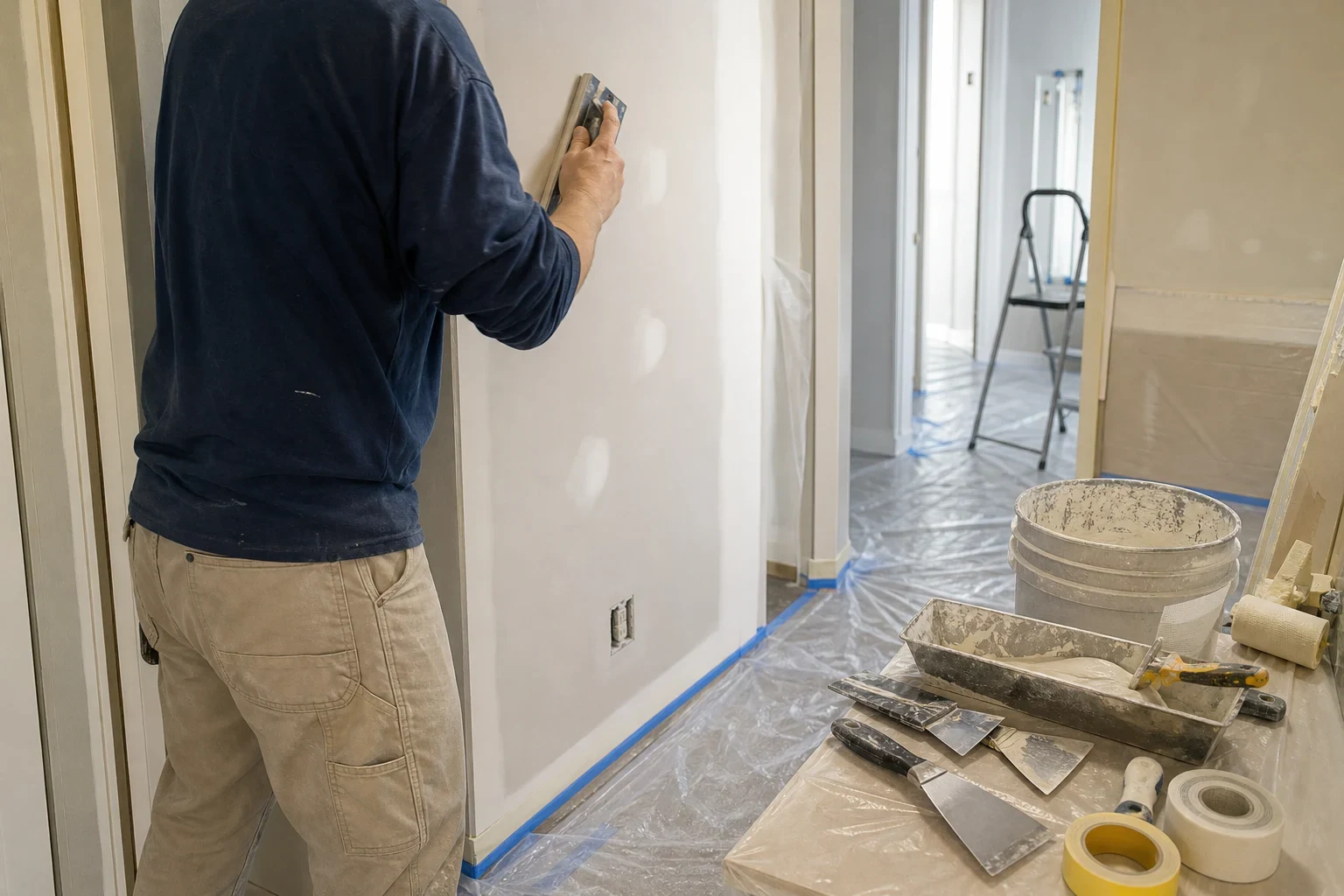
Surface preparation is the work between a damaged or tired wall and a fresh coat of paint. It means scraping loose paint, filling nail holes and dings, sanding joint compound until it blends into the board around it, and sealing anything bare so paint dries evenly.
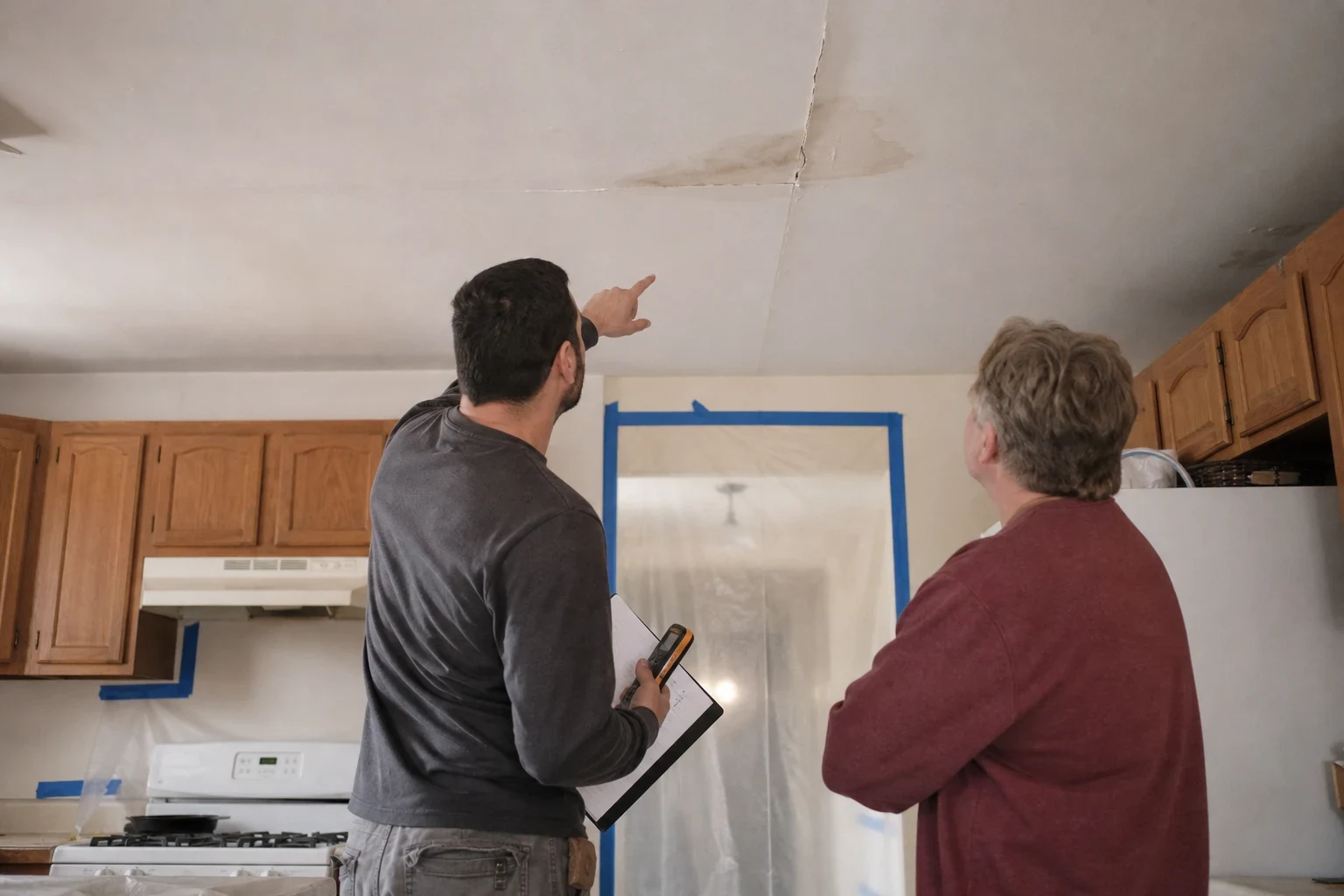
It is the right call when you are about to repaint and the wall has years of small repairs, when a past patch still shows, or when a painter has told you the walls need work first. In a lot of older homes around Rahway, walls carry several layers of paint and patching, and each layer leaves its own edge.
If the drywall itself is cracked, soft or broken, that is a job for our drywall repair or drywall patching service first. We will tell you which one you actually need.
What the prep work includes
- 01
Scraping and deglossing
We remove flaking or bubbling paint and scuff glossy areas so the next coat has something to grip.
- 02
Filling holes and dents
Nail holes, anchor holes, furniture dings and gouges get filled with compound, usually in two thin passes so nothing shrinks back into a dimple.
- 03
Feathering seams and old patches
A patch that shows is almost always too narrow. We widen the compound and sand it out past the edge so the repair disappears under paint.
- 04
Sanding with dust control
We sand by hand and with a vacuum-connected sander where it fits the job, which keeps most of the fine dust out of the air and off your furniture.
- 05
Spot-priming bare compound
Raw joint compound soaks up paint differently than painted wall. Priming those spots prevents the dull patches known as flashing.
Questions about Surface Preparation and Sanding?
Call(732) 696-7273Signs your walls need prep before paint
Tape lines you can see
Seams that show as stripes or ridges, especially in side light from a window, mean the finish was never fully feathered.
Patches that shine or look dull
A repair that looks different from the wall around it after painting usually was not primed or sanded flat.
Peeling or bubbling paint
Paint that lifts will take the new coat with it. It has to come off first.
Nail pops and small round bumps
Fasteners that have backed out push up little circles of compound. They need to be reset and refilled, not painted over.
Rough or lumpy texture
Old roller texture, drips and sanding scratches all show more under fresh paint, not less.
How a prep day runs in your home
- 1
Look with a work light
We shine a bright light across the wall at a low angle. It shows every ridge and dent so you see what we see before we start.
- 2
Protect the room
Floors get covered, furniture is moved or wrapped, and doorways are sealed with plastic when the sanding is heavy.
- 3
Fill, dry and sand
Compound goes on in thin coats with drying time between them, then gets sanded smooth. Bigger jobs can run into a second visit because compound needs to dry fully.
- 4
Prime and clean up
We spot-prime the repairs, vacuum the surfaces and floors, and leave a clean work area ready for paint or for our paint touch-ups service.
What moves the cost of prep and sanding
Prep is priced by the condition of the surface, not just its size. A large wall in good shape can cost less than a small one covered in old patches. We look at the walls first and explain each line before any work starts.
- How much repair is hiding
- A few nail holes is quick. Wide seams, many patches or peeling paint add hours of filling and sanding.
- Square footage and ceilings
- More area takes more time, and ceilings are slower than walls because the work is overhead.
- Skim coating
- When a wall is rough all over, a thin skim coat across the whole surface is often more sensible than chasing spots. It costs more but gives a smoother result.
- Room setup
- Full rooms of furniture, stairwells and tall ceilings that need staging all add setup time.
Common prep and sanding questions
Will a fresh coat of paint cover these flaws on its own?
Usually not. New paint follows every bump and edge beneath it, and satin or eggshell sheens make ridges even easier to spot. Window light falling across the wall from the side tends to reveal them within days of painting.
How dusty will my house get?
Some dust is part of sanding. We cover floors, seal doorways when needed and use dust-collecting sanders where they fit, then vacuum before we leave. Most of the mess stays in the room we are working in.
Do you do the painting afterward?
Our work covers getting the surface ready, priming repairs and paint touch-ups on the areas we fix. Your walls will be primed where needed and ready for the next coat.
How long does it take?
A single room with light repairs is often done in a day. Deeper fills and skim coats need drying time, so those can take two or three visits. We tell you the expected schedule when we see the walls.
Do you work for landlords in nearby towns?
Yes. We prep walls for homeowners, landlords and property managers in Rahway and nearby towns like Linden, Clark, Cranford and Woodbridge.
Get your walls ready for paint
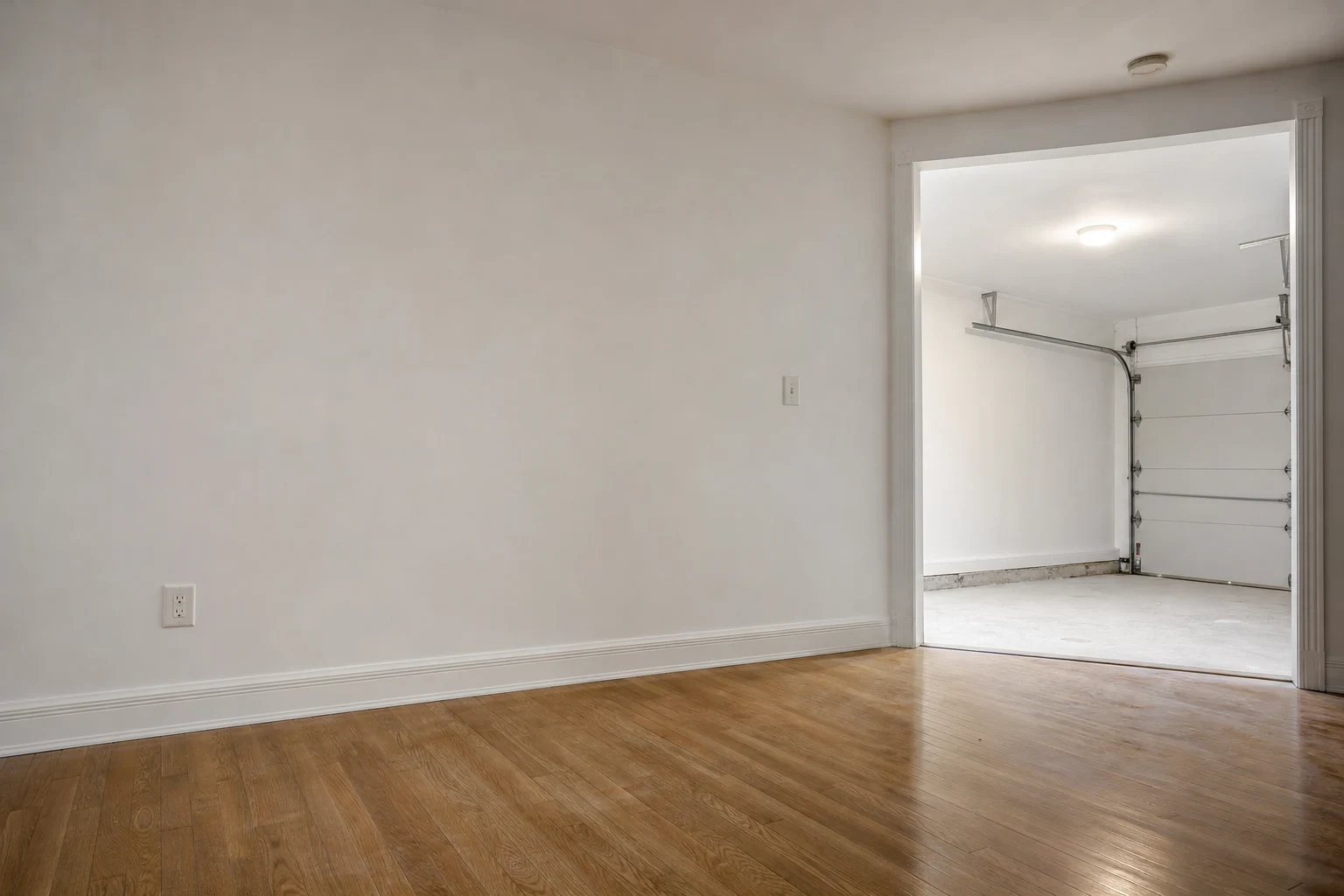
Tell us what the room looks like and what you plan to do with it. We will give you a straight answer on how much prep it needs and what drives the cost.