ServicesDrywall Repair
Drywall Repair in Rahway, NJ
We fix damaged drywall in your home: doorknob holes, cracked seams, popped nail heads and soft spots left by a leak. Before any work starts, we tell you what caused it, what the repair involves and what drives the cost, so you decide with the full picture.
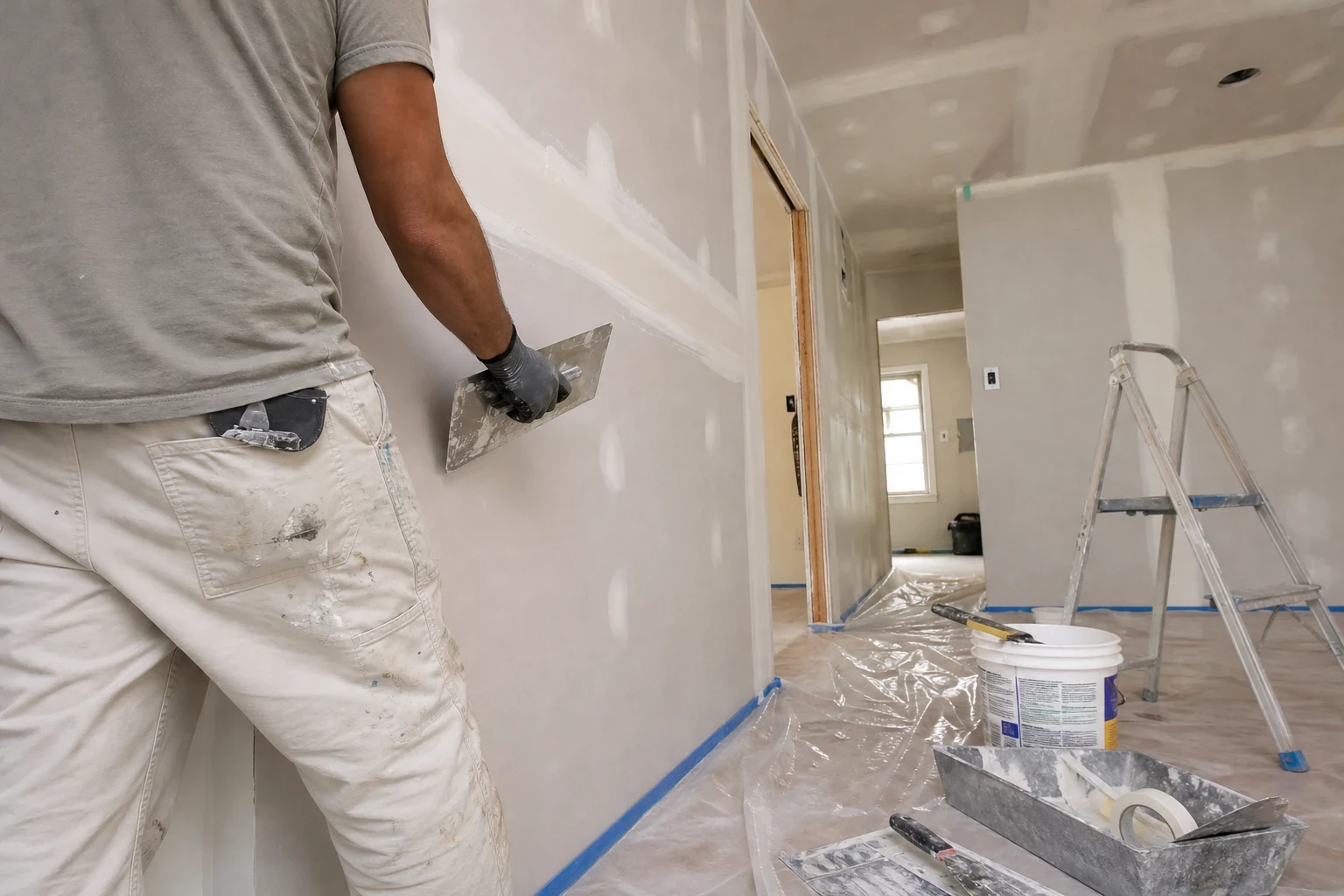
When drywall repair is the right call
Drywall is gypsum pressed between two layers of paper. It goes up fast and it breaks easily. A chair back, a door swung too hard or a leak from the bathroom above can tear the paper face or soften the gypsum core. Once that happens, the board will not recover on its own.
Repair makes sense when the damage covers part of a wall or ceiling and the framing behind it is sound. Small dings get a quick patch. Larger breaks get a new piece of board fastened to the studs, then taped, finished and sanded so the repair disappears under paint. If a wall is damaged along most of its length, we will tell you when replacing full sheets through drywall hanging costs less than fixing it piece by piece.
Many homes in Rahway and towns like Linden and Cranford mix original plaster rooms with later drywall additions. We check what your wall is actually made of before suggesting a fix, because plaster and drywall repair differently. Plaster work is covered on our wall repair page.
What our drywall repair covers
- Holes of any size
- Anchor holes and small dents get compound. Bigger breaks get a new piece of drywall with backing behind it so the patch sits flat and does not flex when you touch it.
- Cracked or lifting seams
- A seam crack usually means the tape lost its bond. We cut out the loose tape, re-tape with fresh compound and feather it wide so the joint stops showing.
- Nail pops
- Nail heads push out as framing dries and shifts over the years. We drive a drywall screw beside each one, set the old nail and cover both.
- Water-damaged sections
- Board that is stained through, soft or crumbling gets cut out and replaced. We confirm the area is dry first, because closing up a damp cavity invites mold and a second repair.
- Corners and edges
- Dented or split metal corner bead on outside corners is replaced and refinished so the corner runs straight again.
- Texture matching and paint touch-up
- If your wall or ceiling has texture, we match it. Repairs are primed, and we can do a paint touch-up over the area if you have the original paint.
Signs your drywall needs repair
Brown rings or bubbling paint
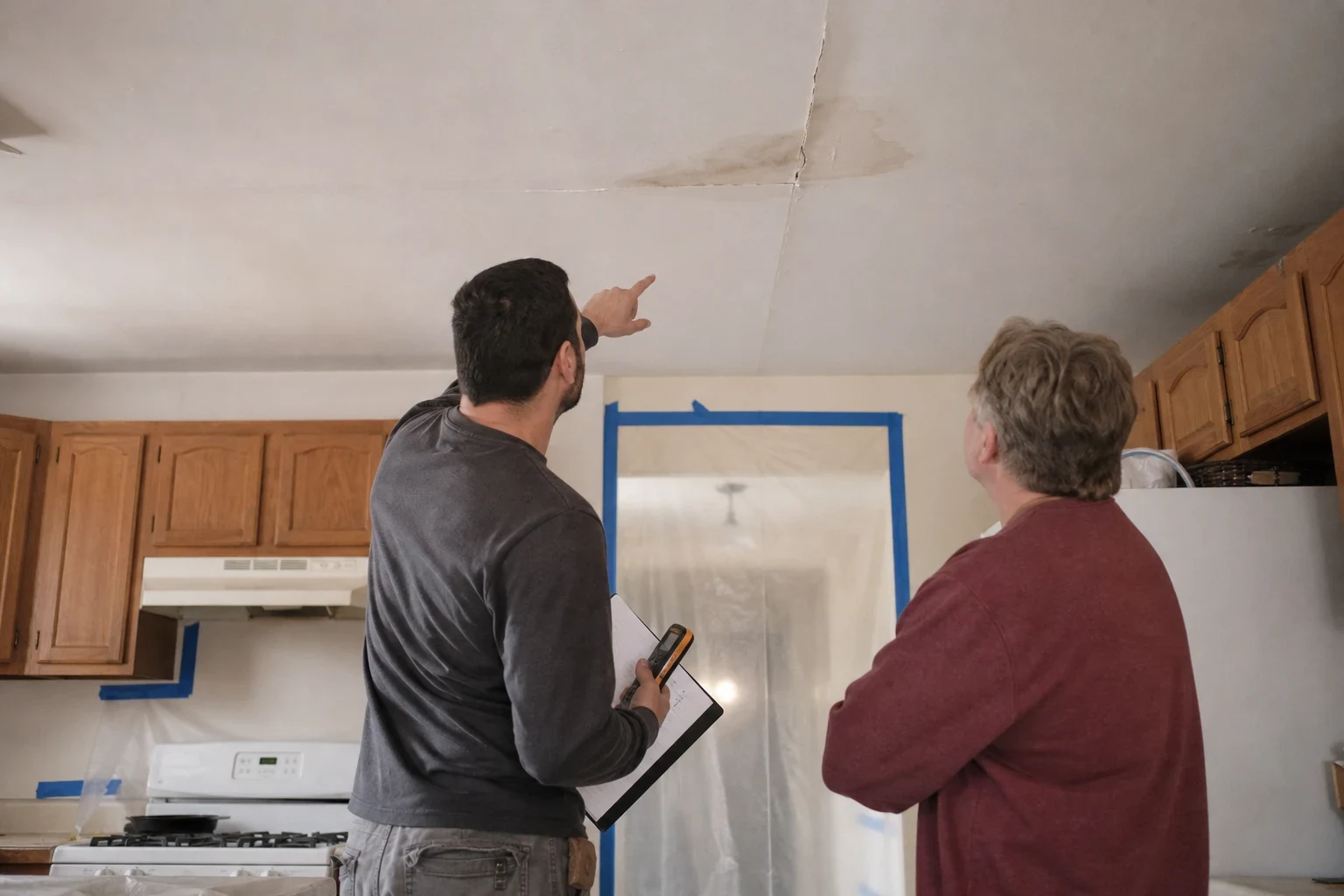
These mean moisture reached the board. Even after it dries, the gypsum underneath may be weak.
A crack that keeps coming back
If you have painted over a crack and it returned, the tape or the board is moving. More paint will not hold it; re-taping will.
Small round bumps in a line
Bumps spaced along a stud line are nail pops. They are easy to fix and easy to ignore until the paint cracks around them.
Soft or spongy spots
Press gently. If the wall gives, the core is damaged and the section should be cut out.
Tape showing or edges peeling
This shows up most in bathrooms and kitchens, where humid New Jersey summers loosen tape that was not bedded well.
A hole behind the door
A missing doorstop lets the knob punch through. The hole grows each time, so it is worth fixing along with adding a stop.
What moves the price of a drywall repair
We price each repair after seeing it, and we walk you through how we got the number. Most of the cost is labor and drying time, not material. These are the things that change it.
Size and number of repairs
One big break and five small holes can cost about the same, since they share the same coats and drying cycles. Grouping repairs into one visit saves you money.
Where the damage is
Ceilings, stairwells and high walls need ladders or staging and more setup time than a hole at waist height.
Texture and finish level
Smooth walls under strong side light need extra coats and careful sanding to hide the patch. Textured surfaces add matching time.
What is behind the wall
Wet insulation, damaged framing or old plaster changes the job. If we find something, we stop and show you before adding any work.
How a repair day goes
- 1
Look and explain
We look at the damage, find the cause where we can and tell you plainly what we recommend and why. You know the price before we start.
- 2
Protect the room
Drop cloths go down, and plastic goes over doorways and vents near the repair. We move furniture with you so nothing gets scuffed.
- 3
Cut, patch and tape
Damaged material comes out back to solid board, new drywall is fastened in and the seams are taped. Every layer of compound has to cure fully before the next one goes on. For a bigger repair, that means we come back once or twice over several days instead of finishing in a single trip.
- 4
Sand, match and clean up
We sand with dust control, match the texture and prime. Then we vacuum and leave you a clean work area, ready for paint.
Drywall repair questions
Will I be able to see the patch?
In most cases, no. Wide feathering, careful sanding and primer make the repair blend in. Flat paint hides repairs better than glossy finishes, and if a spot is hard to hide we tell you up front.
How long does a repair take?
A small patch with quick-setting compound can be done in one visit. Larger repairs usually need two or three visits because each coat has to dry. Water damage and ceilings tend to take longer.
Do I need to fix the leak first?
Yes. We repair the drywall, not the source of the water, so the leak needs to be stopped before we close anything up. We check that the area is dry before we put in new board.
Will my insurance cover the repair?
That depends on your policy and the cause, and your adjuster makes that call. We can describe the damage and the repair in writing and share photos of what we found, which helps with your claim.
Should I patch it or replace the whole sheet?
If the damage is a few spots on a sound wall, patching is cheaper. When damage runs across most of a sheet, replacing it is often faster and looks better. We give you both options when both make sense.
How much dust will there be?
Sanding makes some dust. We seal off the area, use dust control while sanding and vacuum before we leave.
Tell us what happened to your wall
Describe the damage on the phone and we will explain the likely cause, your options and what affects the price. Then we set a time to see it in person.