ServicesDrywall Finishing
Drywall Finishing in Rahway
New board is only half the job. We tape the seams, build up the joint compound in thin coats and sand everything flat so the wall looks like one smooth surface once it is painted. You get a clear answer on what level of finish your room needs.
Where finishing fits in a drywall job
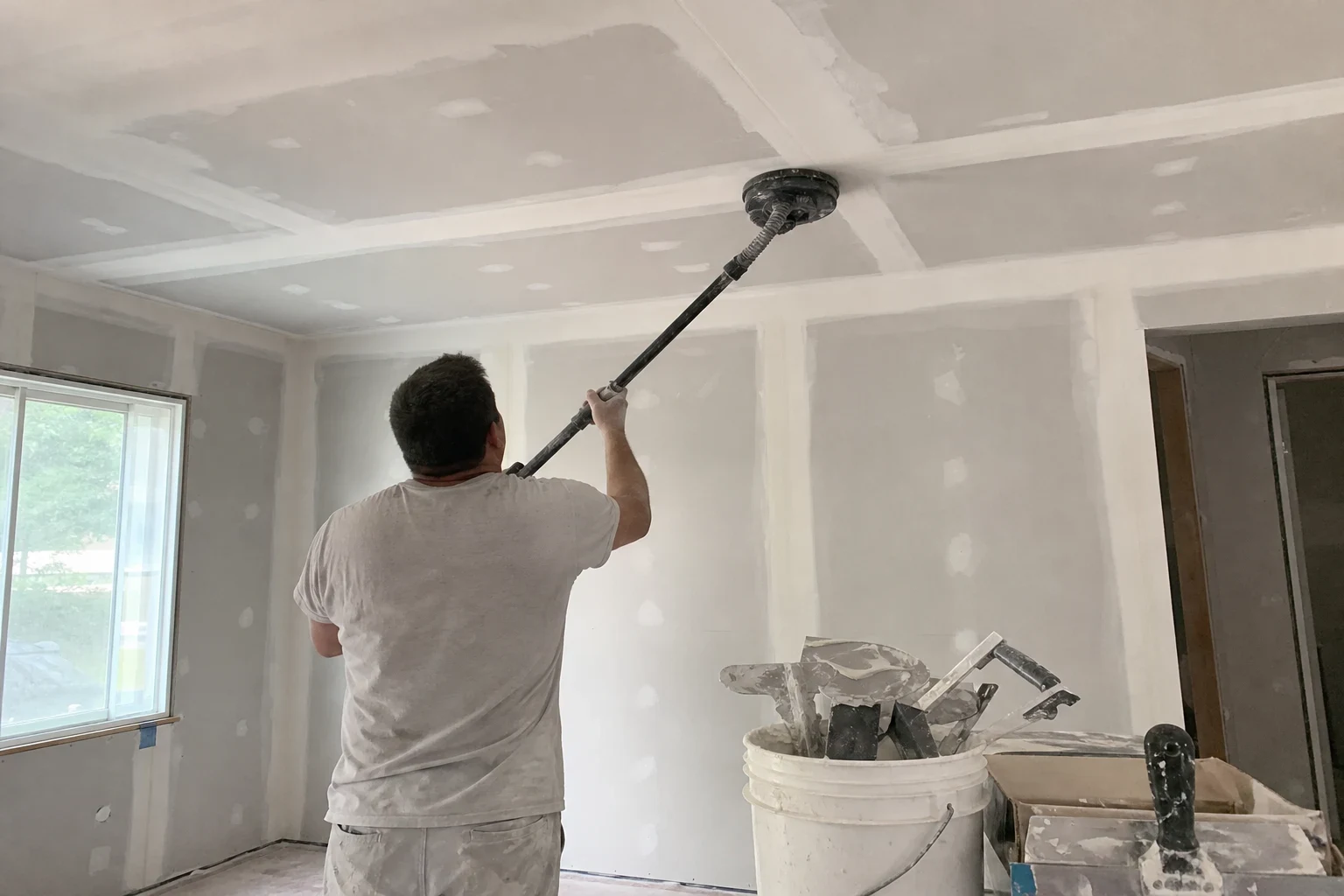
Hanging the sheets gets a wall up. Finishing is what makes it look like a wall: tape over the joints, compound over the screw heads, bead on the outside corners, then coat after coat until the seams fade from view. On a well-finished wall, you can't find the spot where one sheet meets the next.
It is the right call after new drywall hanging, after a large repair, or when an older finish job has started showing its seams. We also pick up half-finished projects where someone hung the board and ran out of time or patience.
The main choice is how smooth the wall has to be. A closet or garage wall can stop at a basic finish. A living room with big windows, or a wall that will get a satin or semi-gloss paint, needs extra coats or a full skim so light raking across it does not show every joint. We tell you which one fits and why.
What the work includes
- Taping every joint
- We embed paper tape in compound on flat seams and inside corners. Paper tape holds up better than mesh on most joints and resists cracking as the house moves through the seasons.
- Corner bead on outside corners
- Metal or paper-faced bead goes on every outside corner so edges stay straight and survive bumps from furniture and vacuum cleaners.
- Three coats, feathered wide
- A tape coat, a fill coat and a final coat, each spread wider than the last. Feathering the edges is what keeps a seam from showing as a ridge.
- Skim coating where needed
- For walls that need a top-grade finish, we roll or trowel a thin layer of compound over the whole surface. It evens out the difference between paper face and compound so paint dries to one sheen.
- Sanding with dust control
- We sand between coats and at the end, using vacuum-connected sanders where we can. Floors and doorways are covered in plastic so the dust stays in the work area.
- Texture matching
- If the room has an orange peel or knockdown ceiling or wall, we match the texture on the new section so it blends with what is already there.
Signs your drywall needs finishing work
You can see the seams
Straight lines or flat bands showing through the paint usually mean the joints were not feathered wide enough or not enough coats went on.
Nail pops and screw dimples
Small round bumps or dents in a row point to fasteners that were set too deep, too shallow or have worked loose over time.
Tape bubbling or peeling
Tape lifts when it was bedded in too little compound. It often shows up first in bathrooms and other damp rooms.
Cracks along corners
Hairline cracks in inside corners or at the ceiling line often come from tape that was never fully bedded.
Bare board after a project
A basement, addition or remodel where the sheets are up but the walls are still raw gray board and screw heads.
What moves the price
Finishing is priced by the work, not by a flat rate per room. The biggest drivers are how much surface there is and how smooth it has to be. We walk you through each item on the estimate so nothing on the final bill is a surprise.
Square footage and seams
More board means more joints, more corners and more compound. Rooms with many small cuts around windows and outlets take longer than long, clean runs.
Finish level
A basic finish for a utility space takes fewer coats. A full skim coat for a well-lit room or glossy paint adds labor across the whole wall.
Ceilings and height
Ceilings and tall stairwell walls need scaffolding or planks and are slower to coat and sand.
Fixing someone else's work
Correcting bad tape, ridges or over-sanded paper takes extra steps before normal finishing can start.
How a finishing job runs
- 1
We look and explain
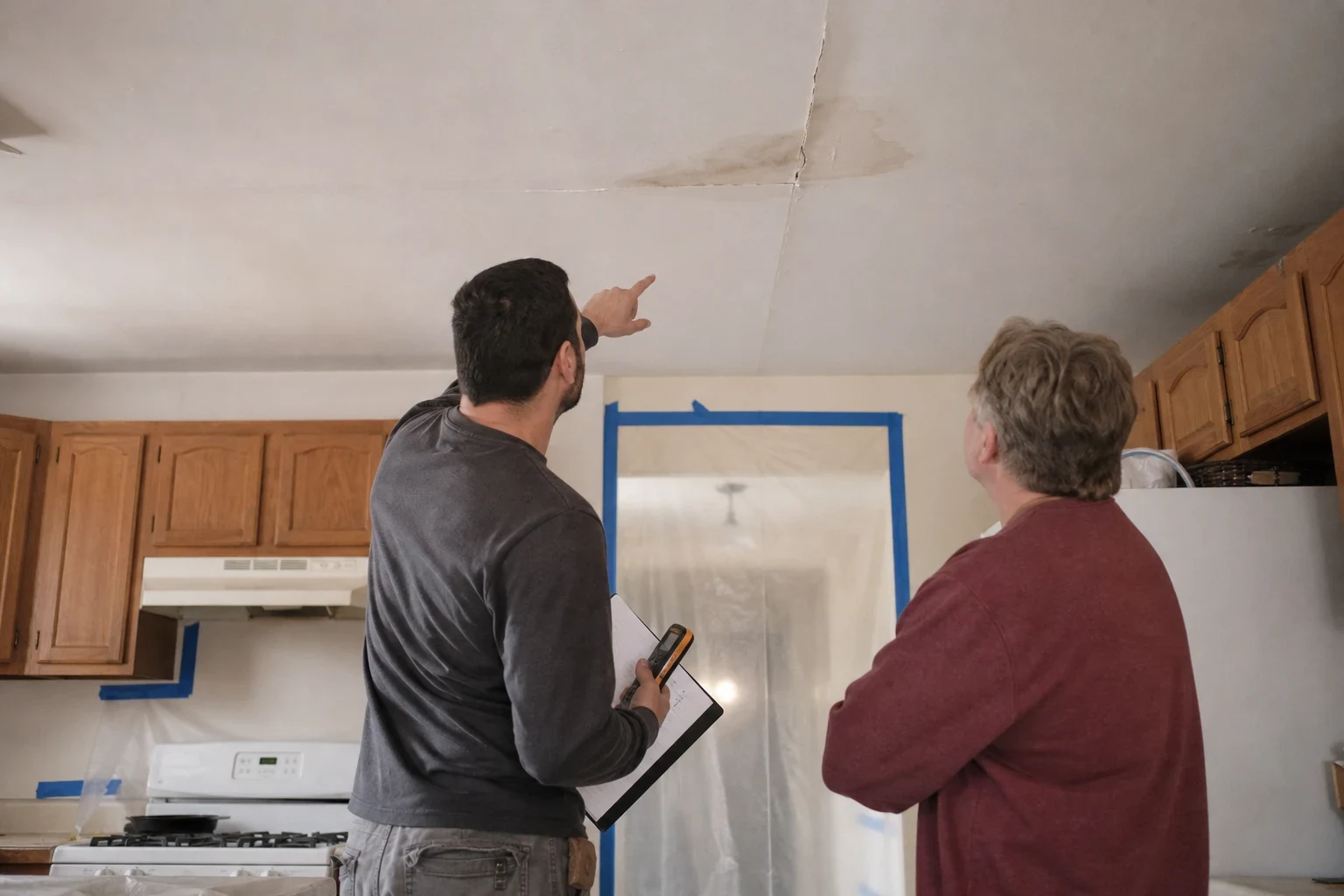
We check the board, the seams and the lighting in the room, then tell you the finish level we recommend and what it involves. You get a written, line-item estimate before any work starts.
- 2
Prep and protection
We cover floors, set up plastic at doorways and move what needs moving. Loose fasteners get reset and damaged paper gets sealed before any compound goes on.
- 3
Coats and drying time
Each coat has to dry before the next one, so most finishing spans several visits. Humid summer weather slows drying, so we sometimes use fast-setting compound for the early coats to keep the schedule tight.
- 4
Final sanding and cleanup
We sand, check the walls with a work light held flat to the surface, touch up any spots that show, then vacuum and pack up. The walls are left smooth and ready for primer and paint.
Drywall finishing questions
How long does finishing take?
Most rooms take a few days from first coat to final sanding, mostly because compound needs drying time between coats. Hands-on time each visit is shorter than you might expect. We give you a realistic schedule before we start.
Will there be a lot of dust in my home?
Sanding compound creates very fine dust, and we set up for that before the first coat goes on. Plastic sheeting goes over doorways, drop cloths go down on the floors, and our sanders hook up to a vacuum wherever the space allows. Every day ends with a cleanup, so the rest of your home stays livable while the work goes on.
Can you finish board that someone else hung?
Yes. We look at how it was hung first. If fasteners are missing or seams are badly gapped, we tell you what needs fixing and why before we tape over it.
Do I really need a skim coat?
Not always. It makes sense for walls with strong side light, dark colors or glossy paint, where every joint would show. In a closet or basement storage room, three good coats on the seams is usually enough, and we will say so.
Is the wall ready to paint when you leave?
It is ready for primer. New compound and paper absorb paint differently, so a coat of drywall primer comes first. For small finished areas, our paint touch-ups service can blend the patch into the existing wall.
Ready for smooth walls?
Tell us what was hung, where it is and how the room is lit. We will explain the finish level that fits and walk you through the cost on the phone.