ServicesDrywall Patching
Drywall Patching in Rahway, NJ
We patch holes in drywall, from nail pops and anchor holes to a doorknob dent or an access cut-out left after other work. We fill, tape and feather each patch, sand it flat and match the texture so it disappears once it's painted.
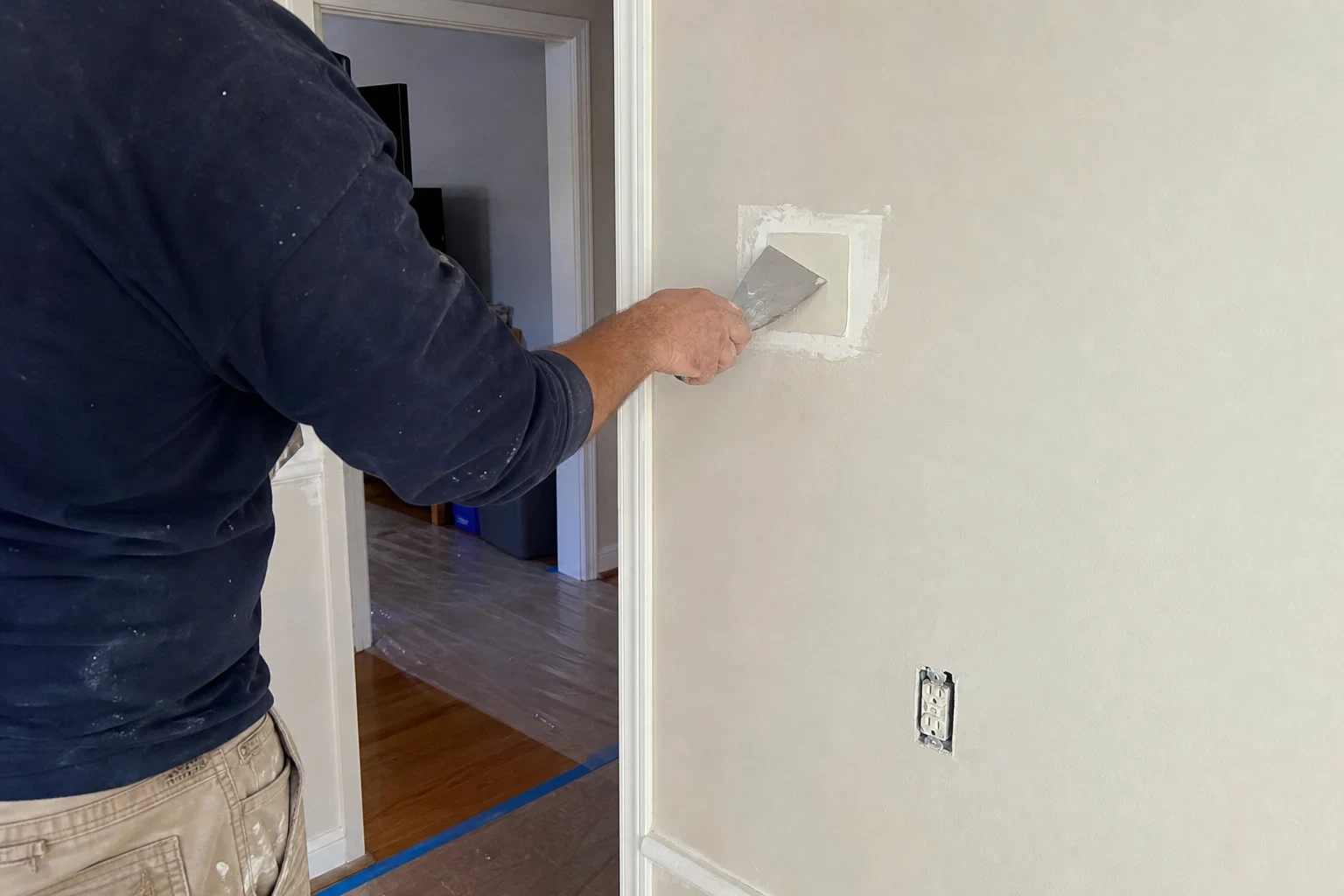
What a Good Patch Should Look Like
A patch is the right call when the damage is limited to one spot and the drywall around it is still solid and dry. If you can press near the hole and the wall feels firm, patching is almost always cheaper and faster than replacing a whole sheet.
The hard part is not filling the hole. It's making the repair invisible. A patch that is a little too thick shows as a bump when light rakes across the wall, and a patch with the wrong texture shows from across the room. We feather the compound wide, sand it flat and match the surface so you see wall, not repair.
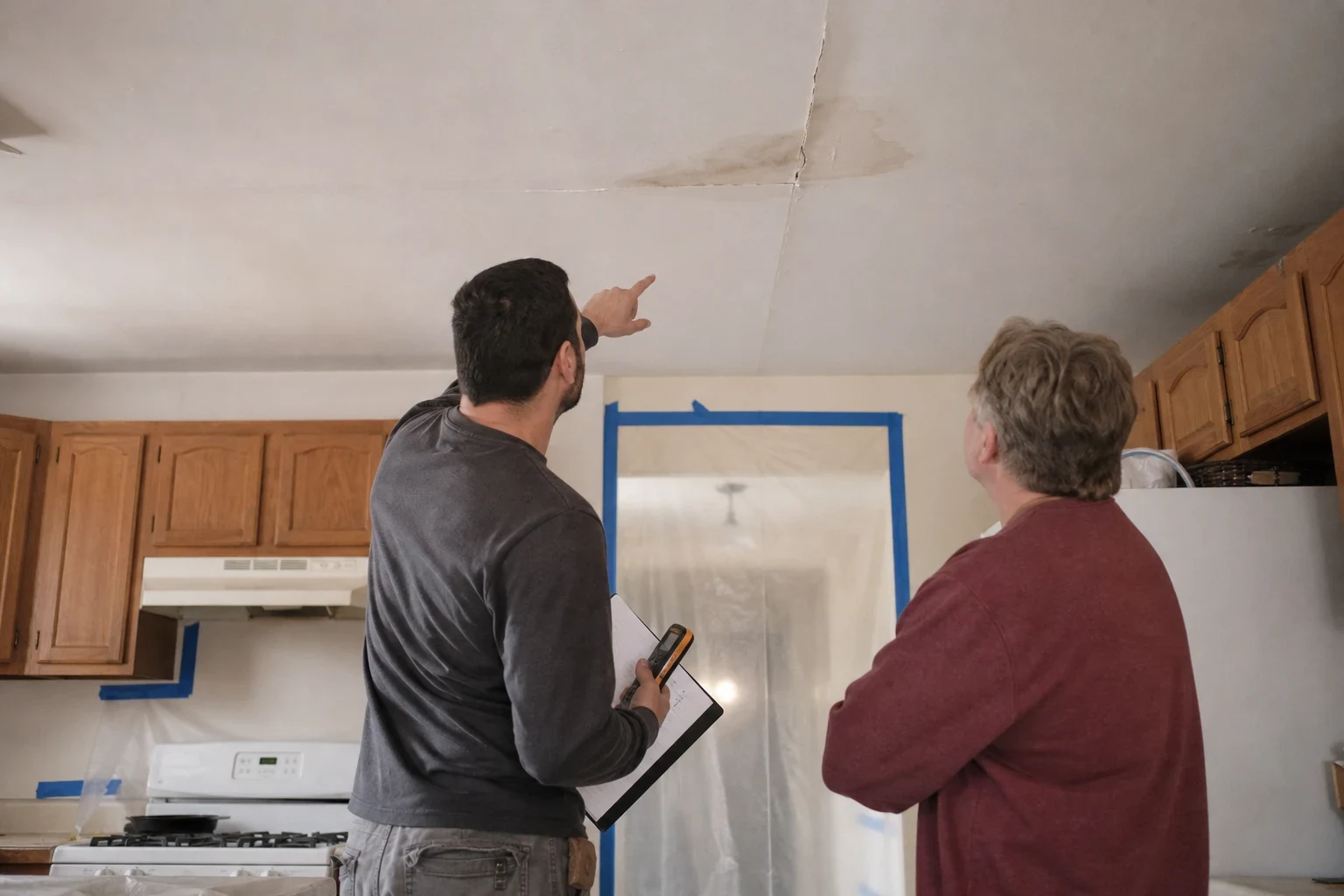
If the damage turns out to be bigger than a patch, such as soft or stained board from a past leak, we'll tell you plainly and explain what drywall repair would involve instead.
What Drywall Patching Includes
Small holes and nail pops
Screw and nail pops, anchor holes and picture-hanging damage get reset or filled, then skimmed so they don't telegraph through paint.
Medium holes up to about fist size
Doorknob strikes and dents get a backed patch or a mesh patch, depending on how much solid board is left around the edge.
Larger holes and access cut-outs
For openings left after electrical or other work behind the wall, we square the hole, add backing strips, set a new piece of drywall and tape the seams.
Texture matching
Smooth, orange peel, knockdown or the hand-troweled look common in older plaster-era rooms. We test our match on the patch before calling it done.
Sanding and dust control
We sand between coats and finish with a light pass. Floors and furniture near the work get covered, and we leave a clean work area.
Optional paint touch-up
If you have leftover paint, we can do a paint touch-up over the patch. Our Paint Touch-Ups page explains how we blend it.
Signs a Patch Is What You Need
- A hole behind a door
- A missing door stop lets the knob punch through. It's one of the most common patches we do, and we'll suggest a stop so it doesn't happen again.
- Holes left after moving out
- Anchors, TV mounts and shelf brackets leave clusters of holes. Landlords and property managers often need these patched between tenants.
- Nail heads popping through
- Small round bumps or cracks in the paint usually mean a fastener has backed out as the framing dried or shifted. We reset it and cover it.
- An old patch you can still see
- If a previous repair shows as a raised square or a halo under the paint, it was usually built up too thick. We can sand it back and redo it properly.
- An opening cut for a repair
- After an outlet move or a look inside the wall, you're often left with a rectangular hole. That needs a fitted piece of drywall, not just compound.
How a Patching Visit Works
- 1
A quick conversation first
You tell us by phone how many holes, how big, and what the walls look like. A photo description helps us bring the right materials.
- 2
Look, protect and prep
We check that the board around each hole is firm and dry, cover the floor, and cut away loose paper and crumbled gypsum so the patch has a clean edge.
- 3
Patch and coat
We set backing or a new piece where needed, tape it, and apply thin coats of compound, feathering each one wider than the last. Most patches need two or three coats with drying time between.
- 4
Sand, match and clean up
Once dry, we sand flat, apply the texture to match your wall, vacuum the dust and walk you through the result before we leave.
What Moves the Cost of a Patch
Patching is usually priced by the job, not by the hour, and the biggest factors are size and how many spots there are. We'll explain what we see and what it means for the price, so there are no surprise add-ons. You can get your quote by phone once we know the basics.
- Size and number of holes
- Ten anchor holes in one room are a different job from one cut-out the size of a shoebox. Grouping several patches into one visit keeps it efficient.
- Texture on the wall
- Smooth walls are simplest. Knockdown, orange peel or hand-applied textures take more time to blend.
- Drying time and return trips
- Compound needs to dry between coats. Deeper patches may need a second visit, which affects scheduling and cost.
- Height and access
- A patch at eye level is quick. One above a stairwell or behind built-ins needs ladders, planks or extra care moving things.
Drywall Patching Questions
- Can you make the patch completely invisible?
- On most walls, yes, once it's painted. The keys are feathering the compound wide, sanding it flat and matching the texture. A patch looks most visible before paint, so don't judge it until the paint touch-up is done.
- Do I need to be home while you work?
- For the first visit it helps, so we can confirm the scope with you. Many landlords and property managers just arrange access for follow-up coats.
- How long before I can paint over the patch?
- Once the last coat is dry and sanded, the patch should be primed before paint so it doesn't flash or look dull. We'll tell you when it's ready, or we can handle the touch-up ourselves.
- Why did my last patch crack?
- Usually because it was filled with compound alone, with no tape or backing, or because the hole edge was loose. We remove the old material and patch it with proper support so it holds.
- Do you patch walls in nearby towns?
- Yes. Along with Rahway, we work in Clark, Linden, Cranford, Woodbridge and other towns close by. Our Service Areas page lists them.
Ready to Get That Hole Fixed?
Tell us what you're looking at, and we'll give you a straight answer on whether a patch will do and what drives the cost. Then we'll set a time that works for you.