ServicesCeiling Repair
Ceiling Repair in Rahway
A stain, a crack or a soft spot overhead is easy to ignore until it spreads. We find out why it happened, fix the damaged drywall, match the texture around it and leave the room clean, so the repair blends in.
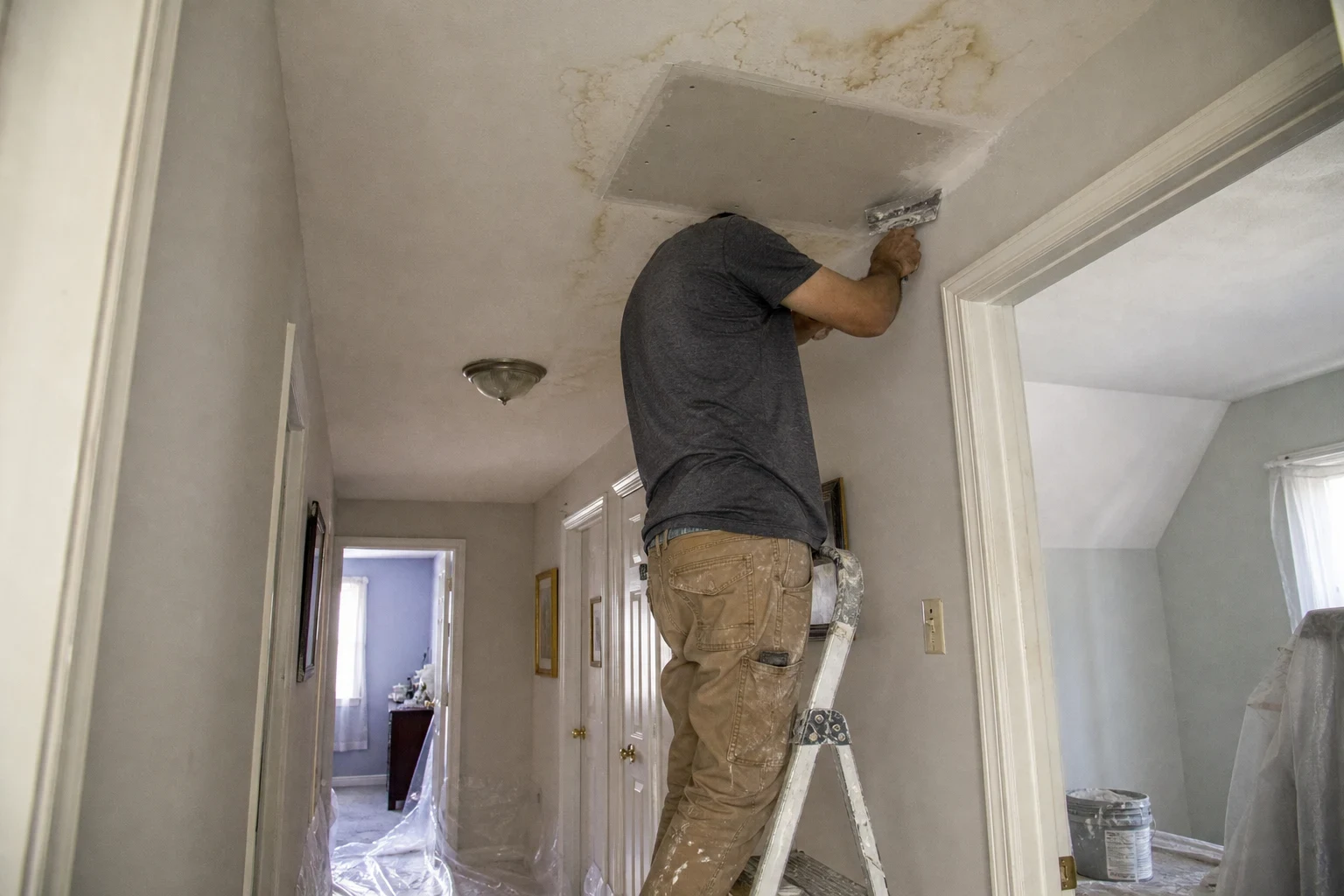
What ceiling repair covers and when it makes sense
Ceiling repair means fixing the drywall above your head: cutting out water-damaged board, re-securing sagging panels, closing cracks along tape seams and setting popped nails. It also means matching the finish, whether your ceiling is smooth, orange peel, knockdown or the older popcorn style.
Most ceiling damage has a simple cause. Water from a bathroom or a leak above. Fasteners backing out as the house moves through the seasons. Tape that was never bedded well and lets go years later. We tell you which one we see, because fixing the surface without addressing the cause usually means seeing the same stain next spring.
If the problem is a single area, ceiling repair is the right call. If the whole ceiling is failing or the board is soaked across a room, we will say so and talk through drywall hanging instead.
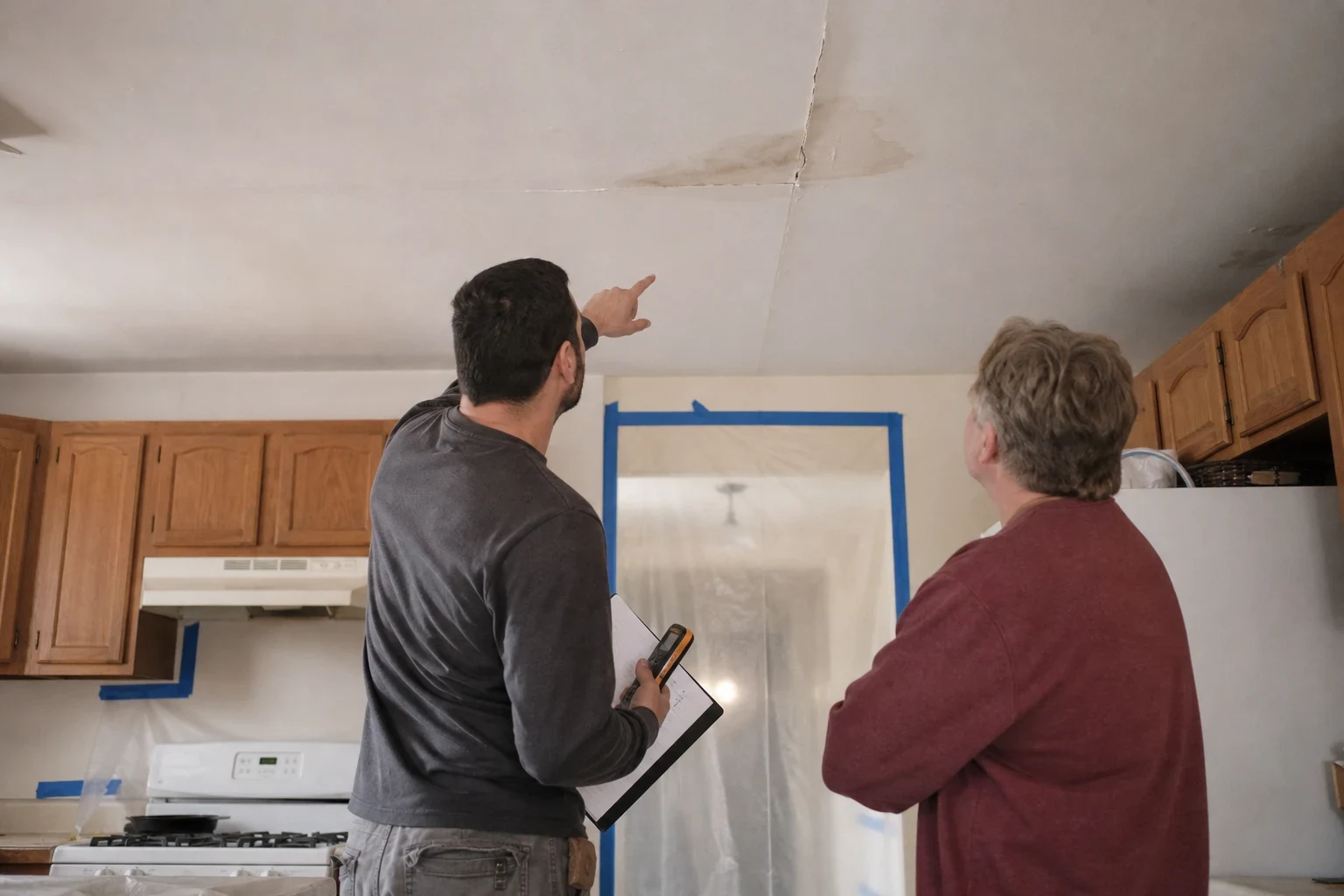
What the work includes
- 01
Finding the cause first
We look at the stain pattern, press-test the board and check whether the area is still damp. You get a plain answer about what we think happened and whether it has stopped.
- 02
Cutting out damaged board
Wet or crumbling drywall gets cut back to solid material and replaced with new board fastened to the framing. Leaving soft board in place only hides the problem.
- 03
Seams, cracks and nail pops
Cracked tape joints are opened up, re-taped and re-coated. Popped nails are reset or replaced with screws so they stay put.
- 04
Texture matching
We blend new work into the existing ceiling finish. Smooth ceilings get feathered coats, and textured ceilings get a matched spray or hand-applied pattern.
- 05
Primer and paint touch-up
Repaired areas are primed with a stain-blocking primer so old water marks do not bleed through. We can follow with a paint touch-up when you have the matching ceiling paint.
- 06
A clean work area
Floors and furniture are covered before we start, and we clean up the dust and debris before we leave.
Questions about Ceiling Repair?
Call(732) 696-7273Signs your ceiling needs attention
Brown or yellow rings
Water stains mean moisture reached the drywall. Even after it dries, the board may be weakened and the stain will bleed through regular paint.
Sagging or soft spots
A drooping section usually means wet board or fasteners that have let go. Keep people out from under it and get it looked at soon.
Cracks along straight lines
Long straight cracks often follow tape seams. They tend to grow wider over time if the tape has lost its bond.
Small round bumps
These are nail pops. They are common and easy to fix, but a cluster of them can point to loose board.
Bubbling or peeling paint
Paint that blisters on a ceiling, especially in a bathroom, often means moisture is getting behind it.
How a ceiling repair job runs
- 1
Start with a phone call
Describe the damage and which room it is in. We will want to know if there has been a leak, how long the mark has been there and what the ceiling texture looks like, then we pick a time to come out.
- 2
Inspection and a written estimate
We check the area, confirm it is dry and explain the cause as we see it. You get a written estimate that lists the work, so nothing is vague.
- 3
Protection and repair
We cover the floor and furniture, cut out damaged drywall and install new board. Seams are taped and the first coats of compound go on.
- 4
Finishing coats and sanding
Compound needs drying time between coats, so most repairs take more than one visit. We sand between coats and keep dust contained as much as we can.
- 5
Texture, primer and cleanup
The texture is matched, the patch is primed and the room is cleaned. We walk you through the finished repair before we pack up.
What affects the cost of ceiling repair
We price each ceiling after we see it, because two stains the same size can hide very different damage. These are the things that move the number, and we will point to each one on your estimate.
- Size and depth of the damage
- A few nail pops cost far less than cutting out a soaked section of board. How far the water traveled matters more than the size of the visible stain.
- Texture type
- Smooth ceilings need careful feathering. Knockdown and popcorn textures take extra steps to match, and older popcorn ceilings may need testing before anyone disturbs them.
- Ceiling height and access
- Stairwells and high ceilings need taller ladders or scaffolding. Rooms full of furniture take longer to protect.
- Number of visits
- Each coat of compound has to dry. Larger repairs need more coats and more trips, which adds labor.
Ceiling repair questions
Can you fix the stain without replacing drywall?
Sometimes. If the board is dry, firm and only discolored, a stain-blocking primer and a touch-up may be enough. If it is soft, crumbling or sagging, it has to be cut out. We will press-test it and tell you which case you have.
Should I wait until the leak is fixed?
Yes. Repairing a ceiling that is still getting wet wastes your money. Have the source fixed first, then we confirm the area is dry before we start.
Will the repair be visible?
Our goal is a finish that blends into the rest of the ceiling so you stop noticing where the damage was. Smooth ceilings under strong side light are the hardest to hide, and we will tell you up front if a full ceiling skim coat would give a better result.
My ceiling has popcorn texture. Can you match it?
Usually, yes. In homes built before the 1980s, popcorn texture may contain asbestos, so it should be tested before it is scraped or sanded. We explain that step before any work begins.
Will insurance cover my ceiling damage?
That depends on your policy and the cause, and only your insurer can decide. We can document what we find with photos and give you a written estimate that lists the work, which is what adjusters usually ask for.
Get a straight answer about your ceiling
Describe what is happening overhead and we will explain the likely cause and the next step. We work in Rahway and nearby towns including Linden, Clark and Cranford.