ServicesPaint Touch-Ups
Paint Touch-Ups in Rahway
A good patch can still look wrong if the paint over it is off. We match the color, the sheen and the roller texture, then feather the edges so the spot disappears into the wall. Tell us what you see and we will explain what it takes.
Why a Small Spot of Paint Is Harder Than It Looks
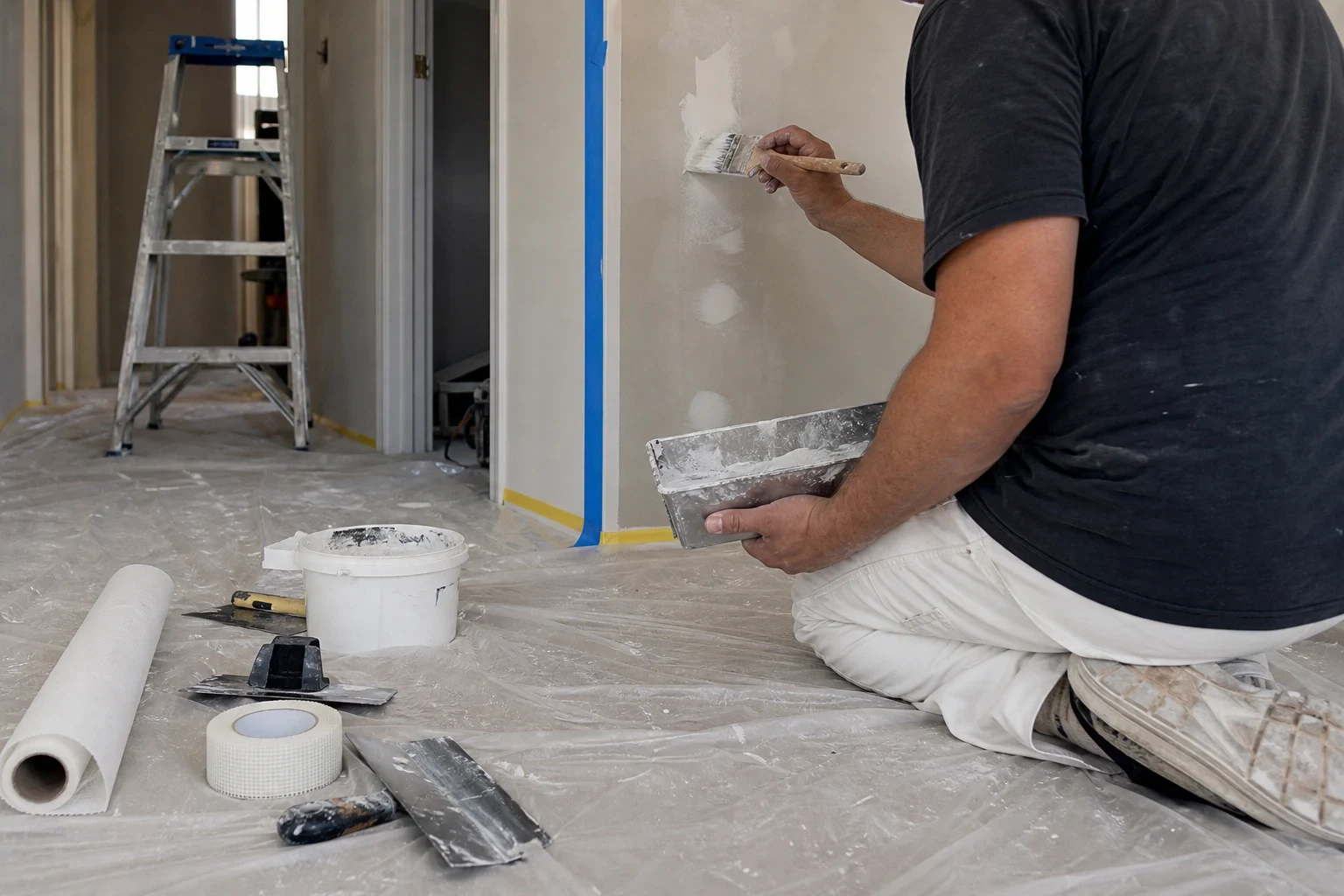
Most touch-ups fail for one of three reasons. The paint was put on fresh joint compound with no primer, so it soaked in and dried dull. The sheen is different from the wall, so the spot looks shiny or flat when light hits it from the side. Or the paint went on with a brush when the wall was rolled, and the texture gives it away.
We fix all of that. Fresh compound gets sealed first, the sheen gets matched to what is on the wall now, and the paint goes on the same way the original did. Many homes in Rahway have walls that were repainted more than once, so we check what is actually on the surface instead of guessing from an old can.
Sometimes a spot touch-up is not the right call. If the wall paint has faded or yellowed, fresh paint of the same color will still stand out. When that is the case we tell you plainly and suggest carrying the paint out to the nearest corner or break, where there is no edge for the eye to find.
What Our Touch-Up Work Includes
Priming over repairs
Joint compound is porous. We seal every patched area with primer so the finish coat dries with the same sheen as the rest of the wall.
Color and sheen matching
If you have the original can or the paint name, we start there. If not, we take a small sample from a hidden spot so it can be matched, and we test it before it goes on the wall.
Matching how the paint was applied
Rolled walls get rolled, with a nap that matches the stipple you already have. Trim edges and tight corners get a brush, just like the original.
Feathered edges
We thin the paint out at the edges of each spot so there is no hard line where new meets old.
Light check before we leave
We look at every spot from an angle and with the lights on and off, because side light is where a bad touch-up shows.
Clean work area
Drop cloths go down, furniture near the wall gets covered, and we take our trash with us.
Signs Your Walls Need a Better Touch-Up
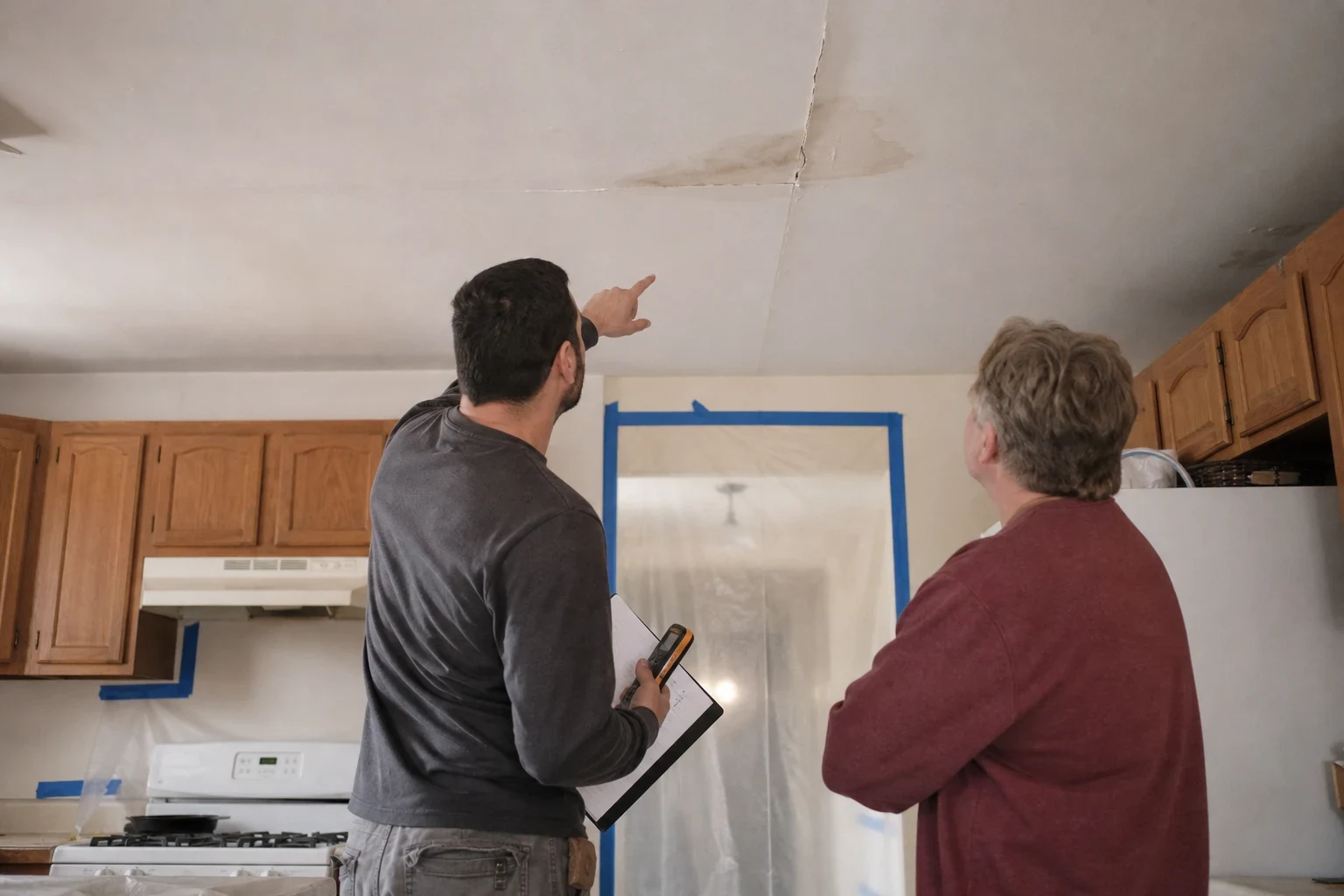
- A halo around a patch
- You can see the outline of an old repair, especially in the afternoon. That usually means the compound was never primed.
- Shiny or dull spots
- A patch that looks glossy on an eggshell wall, or chalky on a satin one, has the wrong sheen.
- Nail pops dabbed with the wrong color
- Small dots that are a shade lighter or darker than the wall are common after a quick fix. They are easy to correct once the color is matched.
- Scuffs in busy areas
- Hallways, stairwells and the wall behind a door take the most hits. When cleaning no longer lifts the marks, paint does.
- A smooth spot on a textured wall
- If a past repair was brushed on a rolled wall, it reads as a flat square. Rerolling with the right nap blends it.
How a Touch-Up Visit Goes
- 1
Start with a phone call
Tell us how many spots, which rooms and whether you still have any paint or the color name. We ask what caused the damage so we know if a drywall patching job comes first.
- 2
Look and test
We check the sheen, look for fading and confirm the color match on a small test area. If the wall has aged too much for a spot fix, you hear that before any paint goes on.
- 3
Prep the surface
We clean off dust and grease, lightly sand rough edges and prime any bare compound. Good surface preparation and sanding is most of what makes the paint blend.
- 4
Paint and feather
The finish coat goes on with the same tool as the original, usually two thin coats, with the edges feathered out.
- 5
Check and clean up
We walk the room with you, look at each spot in side light, then pack up the drop cloths and leave the area clean.
What Moves the Cost of a Touch-Up
Touch-up pricing depends more on the paint than on the size of the spot. A dozen small spots in one matched color can take less time than two spots on a faded, deep-colored wall. We explain the cost drivers on the phone and give you a clear quote before we start.
- Whether we know the paint
- Having the can or the brand and color name saves matching time. Without it, we need a sample and a test area.
- Color depth and sheen
- Deep reds, blues and grays often need extra coats to cover primer evenly. Higher sheens show every flaw, so they take more care.
- Spot fix or out to the corner
- If the wall has faded, carrying the paint to a natural break uses more paint and time but gives a result you will not notice later.
- Number of spots and rooms
- Several areas in one visit cost less per spot than separate trips, since setup and matching happen once.
- Height and access
- Stairwells and tall ceilings need ladders or planks, and crowded rooms take time to protect.
Paint Touch-Up Questions
- Do I need the original paint can?
- It helps, but it is not required. The label tells us the brand, color and sheen, which speeds things up. Without it, we take a small sample from a hidden spot so the color can be matched, and we test it on the wall first.
- Why did my last touch-up show even with the same paint?
- Usually it is one of three things: no primer over fresh compound, a different sheen, or a brush used on a rolled wall. Paint on the wall also fades over time, so a fresh coat from the same can can look brighter. We check for all of these before painting.
- Can you touch up a wall without doing a repair first?
- Yes. Scuffs, marks and old mismatched spots can be painted on their own. If we find a crack or a loose patch underneath, we will point it out and you can decide whether to add a drywall repair.
- Will the touch-up be invisible?
- On a wall with paint in good shape and a known color, it should blend in normal light. On faded or very glossy walls, a spot fix may still show, and we will tell you that up front and explain the option of painting to the nearest corner.
- How soon can I clean the wall or put furniture back?
- Furniture can usually go back once the paint is dry to the touch, which is the same day. Wait a couple of weeks before scrubbing the area, since paint takes time to fully harden.
Get Those Spots Matched Properly
Tell us what you are seeing and what paint you have on hand. We will give you a straight answer on whether a spot fix will work and what it will take.